Location & Transportation
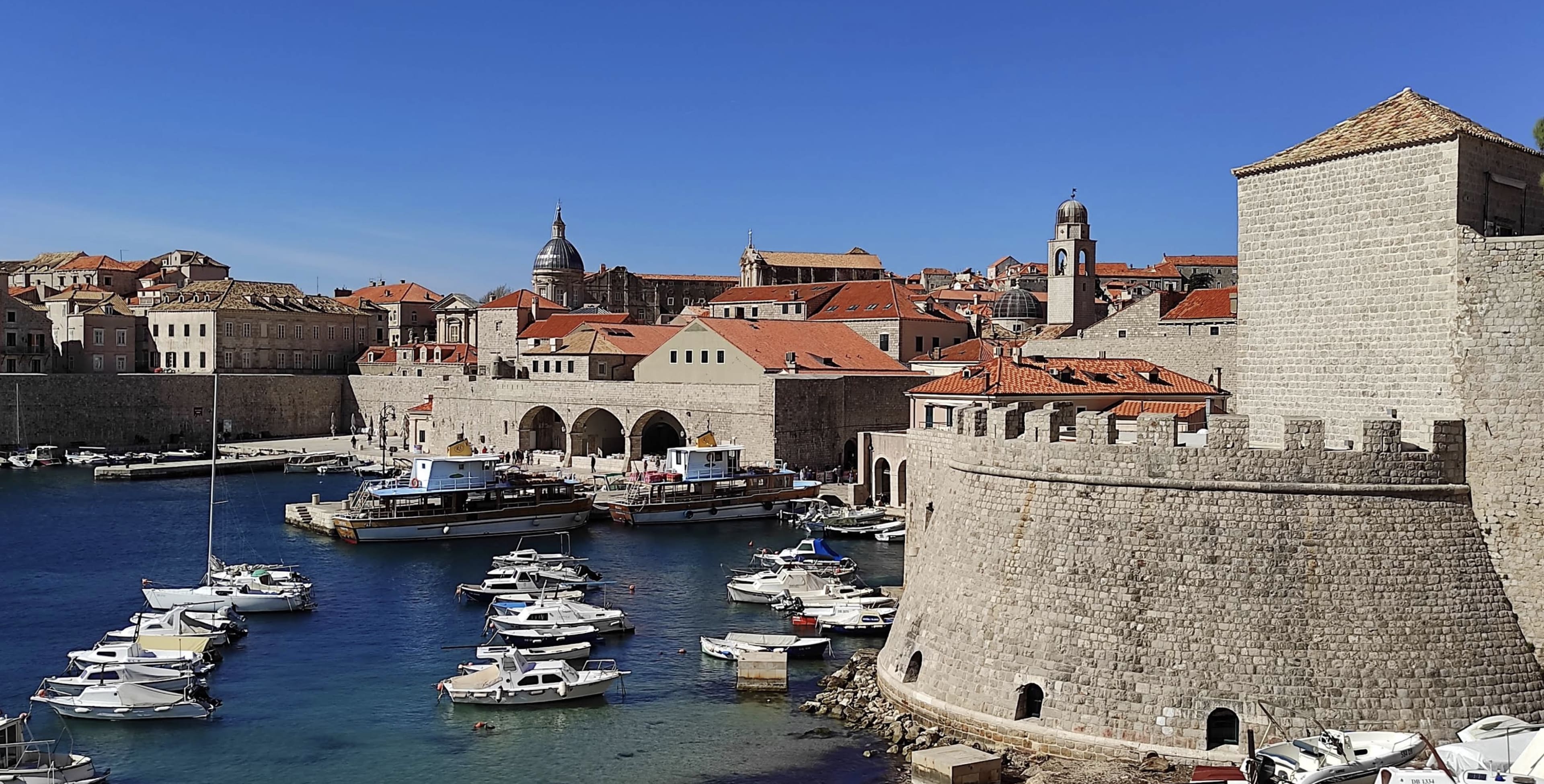
Dubrovnik is one of the most beautiful arrivals I know of anywhere in the Mediterranean, and since the port was upgraded, almost every ship now ties up alongside instead of anchoring. You’ll dock at Gruž, the working harbor at the far end of the waterfront, about 2.5 km (1.5 miles) northwest of the Old Town. Only a handful of small ships still tender their guests straight into the Old Harbour in the center of town — a lovely way to arrive if you get it.
Getting from Gruž to the Old Town is easy, and you have four good options:
- Ship’s shuttle. Most lines run one to Pile Gate, the main western entrance. From the drop-off it’s only a few steps to the walls. Convenient, but the return lines can get long when several ships turn around at once.
- Public bus. There’s a stop just outside each of the two pier gates — look for lines 1A, 1B and 8. The ride takes about 10 minutes and buses run roughly every 15 minutes, which is better frequency than most ship shuttles. A ticket bought from the driver runs about €2.50; buy one at the little newsstand (trafika) near the port entrance and it’s cheaper. These buses do get packed with locals and school kids at times.
- Taxi. There’s always a rank at the terminal. Expect roughly €10–15 to Pile Gate. Agree the fare before you get in. With two or more people this is often the best value of the lot, and it saves you the shuttle queue.
- On foot. It’s a 30- to 40-minute walk along the water. Pleasant in spring or autumn, punishing in July.
One thing I’d plan around: Dubrovnik caps cruise arrivals at two ships at a time, and every calling ship stays a minimum of eight hours. That means you rarely get a frantic four-hour dash — but it also means the Old Town fills up in a predictable wave mid-morning. Go early or go late.
A word of warning for anyone bringing luggage ashore: wheeled suitcases are banned on the Old Town’s cobblestones, and there are fines for walking around town in swimwear. The rules are part of the city’s “Respect the City” program and they are enforced.
Nearest Airport
Dubrovnik Airport (DBV) is at Čilipi, about 22 km (13.5 miles) southeast of the city — roughly a 30-minute drive, longer in summer traffic. Airport buses connect to the main bus station at Gruž, right by the cruise berths, which makes it a genuinely easy port to start or end a cruise from. Taxis and pre-booked transfers cover the same run.
Nearby Lodging
Staying in the Old Town puts you inside the walls but means hauling your bag over marble and up steps. I’d rather stay in Gruž — it’s walking distance from the cruise terminal, the bus station and the ferry pier, and it’s noticeably cheaper. Lapad and Babin Kuk, the peninsula just west of the port, have the resort hotels and the swimming beaches, all a short bus ride from both the ship and the Old Town.
Sightseeing
The Old Town is completely pedestrianized and small enough to cover on foot — the Stradun, its marble main street, is only 300 meters long, and the Old Harbour sits another 300 meters beyond it. Before you know it you’re on the other side of town. Some of the side streets climb steeply, though, and that polished marble gets slick in the rain, so wear real shoes.
Here are the things I wouldn’t skip:
- The City Walls. Two kilometers of rampart circling the entire Old Town, and the single best thing to do in Dubrovnik. Allow one to two hours. In high season a ticket runs about €40 for adults (dropping to roughly €15 in winter), and it includes Fort Lovrijenac across the little bay. There are three entrances: on the Stradun by Pile Gate, near St. John’s Fortress, and at the Ploče (Custom’s House) gate. Go at 8 AM opening or in the late afternoon — the crowds build hard from about 9:30, and there is no shade up there.
- Fort Lovrijenac. The freestanding fortress on the rock west of Pile. Already covered by your walls ticket, and the view back at the city is the postcard shot.
- Mount Srđ by cable car. Four minutes and 412 meters up to a 360-degree panorama over the Old Town, Lokrum and the Elaphiti Islands. €30 return, €17 one way. It runs April through November and closes for the winter. Getting to the lower station on foot means a lot of steps — take bus 8 from the cruise terminal, which stops there, or a taxi.
- The Museum of Modern Art. Near Banje Beach, in a handsome villa, with work by Vlaho Bukovac and other Croatian painters. A cool, quiet hour when the sun is at its worst.
- Lokrum Island. A 15-minute boat ride from the Old Harbour to a wooded nature reserve with a monastery, a saltwater “Dead Sea” swimming hole, and peacocks everywhere. The round-trip ticket includes the reserve entrance fee.
- Pile Square. Even if you do nothing else, stand here for the view over the harbor before you stroll down the ramps into the city. The tourist information office is right where the shuttles and taxis drop you.
Tours & Excursions
- Walk it. There is genuinely no reason to rent a car here. The Old Town is pedestrian-only and everything inside the walls is minutes apart. Everything runs off the Stradun.
- Excursion boats. These leave from the pier of the Old Harbour, at the far end of the Stradun, and they’re good value — figure around €12 for a 50-minute loop. Heads up: some of the little islands you’ll pass have nudist beaches. It’s simply part of Croatian life, so don’t be startled.
- Panoramic taxi tour. About €50 an hour for the whole cab, leaving straight from the cruise terminal. It takes you up to the same summit as the cable car, and the drivers — most of whom speak good English — will drop you at the Old Town or back at the ship, whichever you prefer.
- Sea kayaking under the walls. Paddling around Lovrijenac and across to Lokrum at sunset is the best few hours I’ve spent in Dubrovnik. Book something that starts near Pile.
- Konavle Valley and the Elaphiti Islands. If you’ve seen the Old Town before, get out of it. The Konavle countryside south of town is wine, olive oil and Konavle embroidery; the Elaphitis are three sleepy car-free islands an hour north by boat.
It‘s a good idea to compare shore excursion costs between what your cruise line offers and options like Viator and GetYourGuide. They often provide lower prices and include customer reviews and ratings to help you choose the best option. They may also offer more more flexible cancellation or rescheduling policies than those available through your cruise line. However, while booking independently might give you more variety and potentially better rates, be mindful of your schedule - cruise line excursions are typically coordinated to match your ship‘s schedule with guaranteed pick-up and drop-off times.
There is also a great resource for finding local guides at Tours by Locals. Tours by Locals connects you with local guides who can help you plan a private personal tour, guide you, and get you back to your ship on time. You can also check out Rome2Rio for local transportation options. It is a great resource for finding how to get from one place to another, including public transportation, taxis, ferries, and more.
Shopping
The Stradun is the main shopping street, but the good stuff is up the narrow, stepped lanes on either side of it. Look for Konavle embroidery from the valley south of town, silver and gold filigree jewelry, and wine from the Dubrovnik cellars — Pelješac reds and Dingač in particular. There’s a small morning market on Gundulić Square inside the walls that’s worth a wander even if you buy nothing, and the covered market at Gruž is bigger, cheaper and much more local, right by the ship.
Fair warning: the port area itself is wall-to-wall souvenir stands, and there are no duty-free shops.
Dining
Dalmatian cooking is simple and depends entirely on the ingredients being good, which here they are. I’d point you at:
- Fresh grilled fish sold by the kilo, and black risotto inked with cuttlefish
- Peka — meat or octopus baked slowly under a bell-shaped iron lid, usually needs ordering ahead
- Oysters from Ston, up the coast on the Pelješac peninsula
- Rožata, the local custard pudding, and a glass of Prošek to finish
The restaurants directly on the Stradun charge Stradun prices. Walk two minutes up a side street, or head over to Gruž where the harbor-front places feed the people who work here, and you’ll eat better for less.
Culture & Local Events
- Currency & payment: Croatia uses the Euro (EUR). Cards are accepted almost everywhere, but carry some cash for the markets and small cafés.
- Language: Croatian is the official language, and English is spoken well throughout the tourist areas.
- Wi-Fi: Plenty of cafés offer it — some free with an order, some not, so ask first. The crew center in port charges around €5 for three hours, or €1 for ten minutes at an internet station.
- Opening hours: Banks and post offices generally run 7 AM to 7 PM without a midday break, and post offices stay open until 9 PM including Saturdays in the tourist season. Public offices are Monday to Friday, 8 AM to 4 PM. Shops are typically 8 AM to 8 PM, and since shopping hours were deregulated in 2009, most stores in tourist towns open seven days a week.
- Festivals & events: The Dubrovnik Summer Festival takes over the squares and fortresses with theater, opera and classical music from mid-July to late August, and St. Blaise’s Day on February 3 is the city’s own feast day, complete with a procession for its patron saint.
Safety & Awareness
- Dubrovnik is a safe city, but the Old Town is dense with visitors in season — watch your pockets around Pile Gate and on the Stradun.
- The walls and the streets are stone, sun-baked and often stepped. Bring water and a hat; heat is the real hazard here, not crime.
- Emergency services: dial 112.